Scalable SaaS Publisher Platform
The Thailand publishing team was splitting work across tools — manuscripts, reviews, and metrics in different places. We put admin ops, editor queues, and peer review in one product, with optional AI quiz help from article context. The first full submission-to-acceptance cycle ran on this stack.
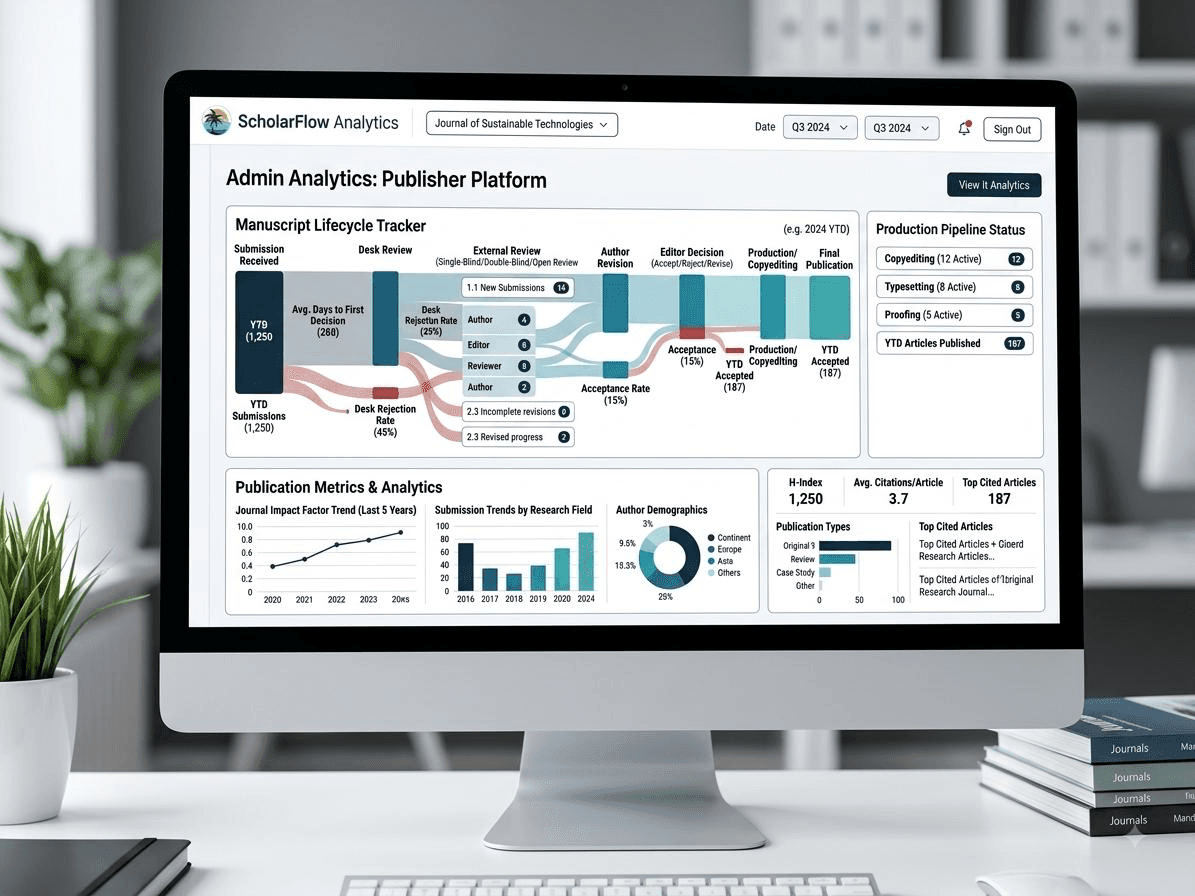
One ops view for manuscript flow, production status, and publication health.
Architecture breakdown
01
Ops Dashboard
Admin and editor screens focused on status, bottlenecks, and next actions — easier to scan day to day.
02
End-to-End Editorial Flow
Submission → review → revision → decision → production, modeled as a clear pipeline with role-appropriate views for admins, editors, and reviewers.
03
AI Engagement Assist
OpenAI-assisted quiz generation from article context, with editorial quick-edit before publish — faster engagement content without giving up quality control.
04
Modular Full-Stack Core
Next.js product UI with Python services and clean API boundaries for content, roles, media metadata, and analytics — ready for more publisher tenants.
The core challenge
The publishing team had manuscripts, peer review, and metrics in separate tools. That made day-to-day editorial work slower — especially for people who are not technical.
- One place for manuscripts, media, and interactive modules
- Admin and editor UIs that non-technical operators can learn quickly
- Peer-review workspace with confidential feedback
- Optional AI quiz drafts with editorial review before publish
- Role permissions, assets, and analytics behind clear APIs
Technical solution
Next.js powers the product UI for admins, editors, and reviewers. Python services support quiz orchestration and heavier content pipelines. Authorization, media metadata, and performance tracking sit behind clear API boundaries so each part can evolve without breaking the rest.
The hard part was an admin UI people could learn quickly. Next.js kept screens consistent; OpenAI helped draft engagement quizzes with editor review; APIs kept content, roles, and analytics separate so pieces could change independently.
Engineering challenges
No single place for the pipeline
Articles, media, and interactive modules lived in different tools. We brought them into one ops surface with straightforward navigation.
Admin UI that was hard to learn
Older admin screens were dense. We simplified layout and language so editorial and business staff could work without constant hand-holding.
Peer review needed one workspace
Reviewers needed the manuscript and scorecard together. We used a split view for reading, rating, and confidential editor feedback.
Quizzes took too long by hand
Building engagement quizzes manually was slow. An AI draft from article context, plus quick edit before publish, kept editors in control.
Impact
1 cycle
First full submission → acceptance on the new flow
3 roles
Admin, editor, and reviewer workspaces
AI assist
Quiz drafts from article context, edited before publish